Stainless steel wire mesh types, grades, and mesh sizes explained
2026-11-13
Fangzhan Metal
Article overview
This article covers the full spectrum of stainless steel wire mesh—types, alloy grades, mesh sizing math, fabrication steps, failure prevention, compliance requirements, and sourcing strategy. It is written for engineers, procurement specialists, and project managers who need precise, actionable guidance rather than generic product descriptions.
Table of contents
- 1. What is stainless steel wire mesh?
- 2. Main types of stainless steel wire mesh
- 3. Grades explained: 304 vs. 316 vs. 316L
- 4. Mesh sizes, wire diameter, and opening calculations
- 5. Compliance, certifications, and material traceability
- 6. Fabrication, installation, and edge treatment
- 7. Failure modes, maintenance, and service life
- 8. Stainless steel wire mesh vs. alternative materials
- 9. Procurement guide: sourcing, MOQ, and supplier vetting
- 10. FAQ
What is stainless steel wire mesh?
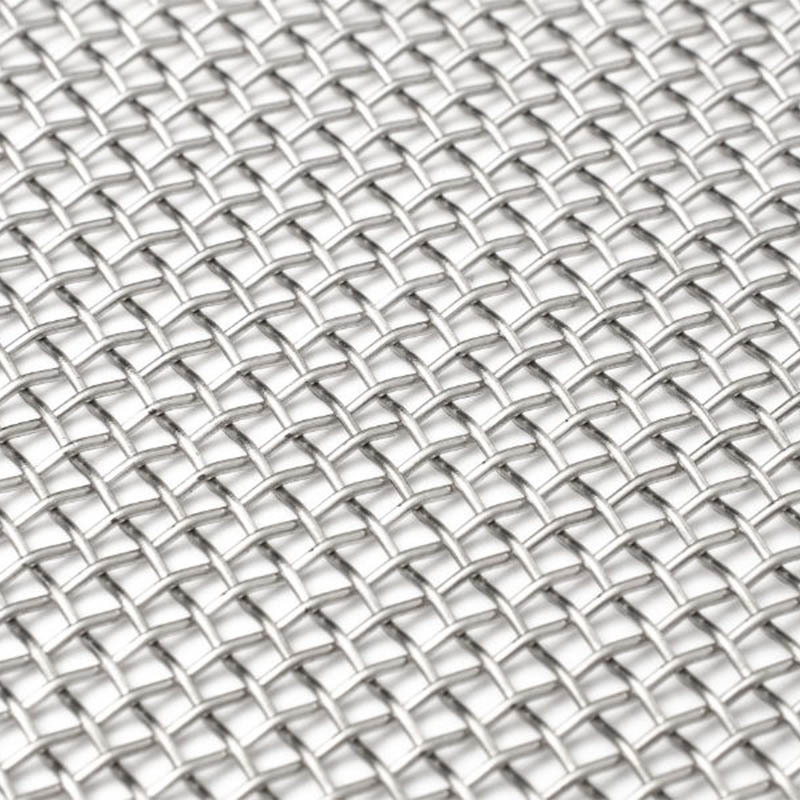
Stainless Steel Wire Mesh is a grid-like material formed by weaving or welding stainless steel wires into a precise, repeating pattern of uniform openings. It is specified by mesh count (openings per linear inch), wire diameter, and alloy grade, and it is supplied as rolls, flat sheets, or fabricated panels for applications ranging from industrial filtration to architectural screening.
The definition matters because the term is often used loosely. Some buyers conflate it with perforated plate, expanded metal mesh, or even plastic screening—materials with fundamentally different mechanical and chemical properties. True stainless steel wire mesh is manufactured from drawn stainless steel wire that meets ASTM A580 standards, and the resulting fabric retains the corrosion resistance, heat tolerance, and dimensional stability that make it indispensable across food processing, petrochemical, pharmaceutical, and construction sectors.
According to Grand View Research, the global metal wire mesh market reached approximately $8.5 billion in 2025 and is projected to grow at a 4.0% CAGR through 2033, driven largely by demand from filtration and energy industries. The U.S. market, where woven stainless steel mesh falls under HTS 7314.14 at a general tariff rate of Free, remains one of the largest single-country consumption centers worldwide.
Why material specification is the first decision
Before selecting a weave pattern or mesh count, the alloy grade must be locked in. Getting this wrong is expensive: replacing installed mesh in a marine environment or a pharmaceutical clean room can cost ten times the original material spend. The sections below walk through every variable in the correct sequence.
Who uses stainless steel wire mesh and why
Aerospace and defense rely on fine-weave stainless steel screen for fuel filtration. Food and beverage manufacturers use FDA-compliant stainless steel filter screen on conveyor belts and drainage decks. Architects specify metal mesh fabric and wire mesh panels for facade cladding and interior dividers. Mining operations deploy heavy-gauge industrial wire mesh on vibrating screens. Each use case has distinct requirements—which is precisely why a one-size-fits-all specification approach fails.
Main types of stainless steel wire mesh
The type of stainless steel wire mesh determines its open area, flow characteristics, and mechanical strength. Choosing the wrong weave is one of the most common—and most preventable—specification errors in the industry.
Woven wire mesh patterns
Plain weave (plain square weave) is the most widely used construction: each warp wire passes alternately over and under each weft wire. It produces equal spacing in both directions, making it ideal for screening and general filtration. Twill weave passes each wire over two and under two, allowing heavier wire diameters and higher mesh counts—common in fine filtration and stainless steel wire cloth applications where sub-100-micron openings are needed.
Dutch weave (also called Dutch plain weave or Hollander weave) uses a much finer weft wire than warp wire, creating a dense, near-zero visible opening that acts as a depth filter. This is the preferred construction for wire mesh filter elements in hydraulic systems and chemical processing. Reverse Dutch twill takes this further, achieving filtration ratings down to 1–5 microns while maintaining structural rigidity.
Welded wire mesh and other constructions
Welded wire mesh is manufactured by resistance-welding wires at each intersection rather than weaving them. The result is a stiffer, dimensionally stable product better suited to structural applications—concrete reinforcement, security panels, and animal enclosures. Wire mesh rolls of welded construction are heavier per square foot than woven equivalents at comparable wire diameter.
Expanded metal mesh is produced by slitting and stretching a solid sheet, not by weaving or welding wire. It offers high rigidity and moderate open area, but its diamond-shaped apertures and varying strand thickness make it unsuitable for precision filtration. Perforated plate is similarly excluded from "wire mesh" specifications in most ASTM contexts.
Grades explained: 304 vs. 316 vs. 316L
Grade selection is the single most consequential decision in any stainless steel wire mesh specification. The difference between 304 and 316 is not cosmetic—it determines whether your mesh lasts two years or twenty in aggressive environments.
304 stainless steel mesh: the workhorse grade
304 stainless steel mesh (18% chromium, 8% nickel) is the most widely produced and stocked alloy. It performs reliably in atmospheric, freshwater, and mild chemical environments. Real-world testing confirms that 304 mesh maintains structural integrity up to approximately 1,500°F (815°C) in continuous service. However, 304 is vulnerable to pitting corrosion when chloride ion concentrations exceed roughly 200 ppm—a threshold easily exceeded in coastal mist, swimming pool environments, or food brine solutions.
316 and 316L stainless steel mesh: marine and chemical grade
316 stainless steel mesh adds 2–3% molybdenum to the 304 base composition, dramatically improving resistance to chloride-induced pitting. In documented coastal installation studies, 316 mesh showed no measurable pitting after 10 years of continuous salt-air exposure at chloride levels up to 600 ppm, compared with visible pitting in 304 samples within 18 months under identical conditions. The cost premium for 316 over 304 runs approximately 20–35% depending on current nickel and molybdenum market pricing.
316L (the low-carbon variant) is specified when the mesh will be welded, since the reduced carbon content below 0.03% prevents carbide precipitation at weld heat-affected zones—a phenomenon called sensitization that destroys corrosion resistance along weld lines. For food-grade, pharmaceutical, and marine fabrications that require welded joints, 316L is the minimum acceptable specification.
"The selection between 304 and 316 should be driven by chloride exposure data, not by cost alone. Specifying 304 in a high-chloride environment to save 25% on material typically results in replacement costs that are 400–600% of the original savings." — ASTM Committee A01 on Steel, Stainless Steel and Related Alloys, technical guidance documentation
| Property | 304 | 316 | 316L |
|---|---|---|---|
| Chromium content | 18% | 16–18% | 16–18% |
| Molybdenum | None | 2–3% | 2–3% |
| Carbon max. | 0.08% | 0.08% | 0.03% |
| Chloride threshold (pitting) | ~200 ppm | ~600 ppm | ~600 ppm |
| Weld sensitization risk | Moderate | Moderate | Low |
| Relative material cost | Baseline | +20–35% | +22–38% |
| Recommended use | General indoor/atmospheric | Marine, chemical, food | Welded food/pharma/marine |
Mesh sizes, wire diameter, and opening calculations
Mesh count is the number of openings per linear inch, measured from the center of one wire to the center of the wire one inch away. Understanding the relationship between mesh count, wire diameter, and actual opening size is essential—and widely misunderstood.
The core formula every buyer needs
The opening size (also called the clear aperture) is calculated as follows:
Opening (inches) = (1 ÷ Mesh count) − Wire diameter (inches)
Opening (microns) = Opening (inches) × 25,400
Open area (%) = (Opening ÷ (1 ÷ Mesh count))² × 100
Example: A 40-mesh screen with a 0.010″ wire diameter produces an opening of (1/40) − 0.010 = 0.025 − 0.010 = 0.015″ (381 microns), with an open area of (0.015/0.025)² × 100 = 36%. Why does this matter? Because two different suppliers can both sell "40 mesh" screens that have completely different open areas if their wire diameters differ. Always specify wire diameter alongside mesh count.
Common mesh size reference table
| Mesh count | Wire dia. (in) | Opening (in) | Opening (microns) | Open area (%) | Typical use |
|---|---|---|---|---|---|
| 4 | 0.063 | 0.187 | 4,750 | 55.9% | Aggregate screening |
| 10 | 0.035 | 0.065 | 1,651 | 42.3% | Coarse filtration |
| 20 | 0.017 | 0.033 | 838 | 43.6% | Food conveyor decks |
| 40 | 0.010 | 0.015 | 381 | 36.0% | General filtration |
| 80 | 0.0055 | 0.0070 | 178 | 31.4% | Fine chemical filtration |
| 200 | 0.0021 | 0.0029 | 74 | 33.6% | Pharmaceutical/lab |
| 325 | 0.0014 | 0.0017 | 44 | 30.5% | Precision filtration |
One industry misconception worth addressing directly: higher mesh count does not automatically mean better filtration. A 200-mesh screen with a heavy wire diameter may have a smaller open area and higher pressure drop than an 80-mesh screen with lighter wire—while also retaining coarser particles due to wire surface effects. Open area percentage and pressure drop data should accompany every wire mesh filter specification.
Compliance, certifications, and material traceability
Regulatory compliance for stainless steel wire mesh is non-negotiable in food, pharmaceutical, and structural applications. Misidentifying an alloy or omitting a certification can trigger product recalls, failed audits, or structural liability.
Key standards and what they govern
ASTM E2016 governs the dimensional tolerances, weave geometry, and testing methods for industrial woven wire cloth—the primary reference standard for stainless steel screen specifications in the United States. ASTM A580 covers the chemical and mechanical properties of the drawn wire used in its manufacture. For welded mesh panels used in construction, ASTM A1064 applies.
FDA 21 CFR compliance is required for any stainless steel wire cloth in direct food contact. NSF/ANSI 51 certification extends this to food equipment components. Both require 316 or 316L grade at a minimum for wet-contact surfaces. ISO 9001 certification from the manufacturer provides systemic quality assurance but does not replace material-specific testing.
Material test reports and how to verify them
A Material Test Report (MTR), also called a Mill Test Certificate, is the foundational traceability document. It should include the heat number, chemical composition by certified analysis, mechanical properties (tensile strength, yield, elongation), and applicable standards compliance statements. When purchasing imported stainless steel wire mesh—particularly relevant given 2026 Section 232 tariff expansions under Proclamation 11021—request the MTR before shipment and cross-reference the heat number against the physical coil or sheet markings on arrival.
Fabrication, installation, and edge treatment
Even correctly specified stainless steel wire mesh will underperform if it is cut, installed, or finished improperly. Edge treatment is where most field failures originate.
Cutting methods and their trade-offs
- Shearing or guillotine cutting — Fast and economical for straight cuts on light-gauge mesh. Produces a raw edge that will fray within 2–3 inches if not treated. Suitable for mesh up to approximately 14 gauge.
- Angle grinder / abrasive disc — Versatile for field cutting but generates heat that can oxidize the cut edge and introduce iron contamination from the disc. Always use a stainless-rated disc.
- Plasma or laser cutting — Precision cuts with minimal distortion. Laser cutting is preferred for fine-weave stainless steel wire cloth because it does not deflect adjacent wires. The heat-affected zone should be passivated after cutting.
- Waterjet cutting — Best for complex shapes and fine mesh. No heat-affected zone; zero contamination risk. Higher per-piece cost, but appropriate for pharmaceutical or aerospace components.
Edge treatment, framing, and installation best practices
Raw cut edges on woven mesh will unravel progressively under vibration or flow. The three standard treatments are: (1) fold-and-crimp the edge wire back into the mesh, (2) apply a continuous bead weld along the perimeter using 316L filler rod, or (3) capture the edge in a channel frame. For wire mesh panels used in architectural applications, powder-coated aluminum or stainless steel channel frames are the industry standard. When installing mesh in a filter housing, ensure the mesh sits in a positive-retention groove rather than relying solely on compression—flow-induced vibration will work a compression-seated mesh free over time. For wire mesh rolls that will be cut to length in the field, keep a 2-inch allowance beyond the final cut line to accommodate edge treatment.
Failure modes, maintenance, and service life
Stainless steel does not rust—or so the common assumption goes. In reality, stainless steel wire mesh fails via mechanisms that are predictable and largely preventable with correct grade selection and maintenance protocols.
The four main failure mechanisms
Pitting corrosion occurs when chloride ions breach the passive oxide layer, creating localized deep pits that progress rapidly through the wire cross-section. It is the primary failure mode in coastal, marine, and food-brine environments and the primary argument for 316 over 304. Stress corrosion cracking (SCC) is more insidious: tensile stress combined with chloride exposure causes transgranular cracking that can propagate catastrophically without visible surface warning. SCC risk is highest in austenitic grades (304, 316) above 140°F (60°C) in chloride-containing media.
Crevice corrosion develops under gaskets, frame channels, or debris accumulation where stagnant, oxygen-depleted fluid concentrates chlorides. Regular inspection of frame-to-mesh interfaces is critical in wet service. Blinding and plugging are not corrosion failures but operational failures: particles accumulate in mesh openings, increasing pressure drop across the stainless steel filter screen until flow falls below acceptable limits.
Cleaning protocols and expected service life
For filter applications, backflushing with deionized water is the preferred first step. Ultrasonic cleaning in a mild alkaline solution (pH 9–11) removes tenacious deposits without attacking the passive layer. Avoid hydrochloric acid cleaners on any stainless grade. Nitric acid passivation (per ASTM A967) restores the passive layer after aggressive cleaning or mechanical abrasion. Under normal industrial service with quarterly cleaning, a properly specified 316 mesh filter element has a documented service life of 8–15 years. Architectural wire mesh panels in non-coastal environments routinely exceed 25 years.
Stainless steel wire mesh vs. alternative materials
No single material is optimal for every application. Understanding where stainless steel wire mesh genuinely outperforms alternatives—and where it does not—is the mark of an experienced specifier.
Head-to-head comparison across key parameters
| Material | Max temp. | Corrosion resistance | Open area range | Relative cost | Best use case |
|---|---|---|---|---|---|
| Stainless steel woven mesh | 1,500°F | Excellent (316) | 25–65% | High | Precision filtration, food, pharma |
| Welded wire mesh (SS) | 1,500°F | Good–Excellent | 40–75% | Medium–High | Structural, security, gabion |
| Perforated stainless plate | 1,500°F | Excellent | 20–50% | High | High-load screening, acoustics |
| Expanded metal mesh (SS) | 1,500°F | Good | 40–80% | Medium | Walkways, guards, facades |
| Sintered wire mesh | 1,400°F | Excellent | 15–40% | Very High | Sub-10-micron depth filtration |
| Plastic / fiberglass mesh | 250°F | Good (non-oxidizing only) | 30–60% | Low | Window screens, mild filtration |
Just like a car that excels in fuel economy will struggle in off-road traction, sintered wire mesh delivers unmatched sub-micron filtration but at a cost and lead time that makes it impractical for bulk conveyor applications. Stainless steel wire mesh occupies the broad middle ground: capable, specified, and replaceable.
Procurement guide: sourcing, MOQ, and supplier vetting
Buying stainless steel wire mesh involves more complexity than most catalog listings suggest. Getting procurement wrong—especially in 2026's tariff environment—adds cost, delay, and compliance risk.
Domestic vs. imported mesh: real trade-offs in 2026
U.S.-produced stainless steel wire mesh and imported material (primarily from China, India, and South Korea) carry different risk profiles. Domestically manufactured mesh from ISO 9001-certified mills typically ships in 2–4 weeks for standard items, carries full MTR traceability to a domestic heat number, and avoids the Section 232-derived tariff exposure introduced under Proclamation 11021 (effective April 2026). Imported mesh can be 15–30% cheaper on the invoice but requires careful attention to: (1) correct HTS classification under 7314.14, (2) anti-dumping and countervailing duty (AD/CVD) orders currently active on certain stainless wire products from specific countries, and (3) lead times of 8–14 weeks plus port clearance delays.
MOQ, stock vs. custom, and the sample process
Standard-gauge 304 and 316 mesh in popular counts (4, 10, 20, 40, 80, 100 mesh) is widely stocked as wire mesh roll stock in 30″, 36″, 48″, and 60″ widths. Minimum order quantities for stock items are typically one linear foot, with pricing breaks at 10, 50, and 100 linear feet. Custom specifications—non-standard wire diameter, asymmetric Dutch weave, or non-standard width—generally require a 100–500 lb minimum order, 3–6 weeks production lead time, and a first-article inspection report before full production release.
When requesting samples, specify: alloy grade, mesh count, wire diameter, width, weave type, and the applicable test standard (ASTM E2016 for woven mesh). A responsible supplier will provide a 6″ × 6″ sample cut with an accompanying MTR at no charge for qualified procurement inquiries. Review the MTR before approving the sample—a physically acceptable sample from a misidentified alloy heat creates a traceability gap that will surface during an audit.
Supplier audit checklist
Before placing a first order, verify: ISO 9001 or equivalent QMS certification; ability to provide full MTRs with heat-number traceability; in-house or third-party dimensional testing per ASTM E2016; declared country of origin and mill of wire production (not just the weaving facility); and current AD/CVD status for the declared country. For food or pharmaceutical applications, additionally require FDA-compliance documentation and NSF 51 listing evidence.
Frequently asked questions
Q: What is the difference between mesh count and micron rating?
A: Mesh count is the number of openings per linear inch and does not by itself define particle retention. Micron rating is the actual opening size in micrometers, calculated from mesh count minus wire diameter. A 100-mesh screen with 0.0045″ wire has a 208-micron opening; the same mesh count with 0.006″ wire produces only a 97-micron opening. Always specify both mesh count and wire diameter for precise filtration control.
Q: Can I use 304 stainless steel wire mesh near the ocean?
A: Not recommended for exposed coastal installations. Salt-laden air at the ocean can carry chloride concentrations well above 304's 200 ppm pitting threshold, especially within one mile of the shoreline. Documented cases show visible pitting on 304 mesh within 12–24 months in direct coastal exposure. Specify 316 or 316L for any installation within five miles of salt water, and consider a passivation treatment at installation.
Q: What certifications are required for stainless steel wire mesh in food processing?
A: At minimum, the material must be 316 or 316L per ASTM A580, with FDA 21 CFR compliance for direct food contact surfaces. NSF/ANSI 51 listing is required for commercial food equipment components in many U.S. jurisdictions. An MTR from the originating mill must be retained for audit purposes. USDA acceptance is additionally required for FSIS-regulated meat and poultry facilities.
Q: How do I prevent stainless steel wire mesh from fraying after cutting?
A: Three reliable methods: fold-and-crimp the cut edge wire back into the adjacent mesh openings; apply a continuous TIG weld bead along the cut edge using 316L filler rod; or capture the edge immediately into a channel frame. For field cuts on fine-weave metal wire cloth, applying a thin bead of high-temperature epoxy or silicone along the cut edge before trimming to final length is a practical temporary measure until permanent edge treatment is completed.
Q: What is the lead time for custom stainless steel wire mesh in 2026?
A: Standard stocked items ship in 1–5 business days. Custom weave specifications—non-standard wire diameter, Dutch weave, or special alloy—require 3–6 weeks from order confirmation for domestic mills, and 8–14 weeks plus customs clearance for imported production orders. Factor in first-article inspection time (typically 5–10 business days) for critical filtration or food-contact applications before committing to a project timeline.
Conclusion
Specifying stainless steel wire mesh correctly means working through a logical sequence: define the environment and chloride exposure, select the appropriate alloy grade, calculate the required opening size from mesh count and wire diameter, verify compliance requirements, and establish an edge treatment and maintenance plan before procurement. Shortcutting any step—especially grade selection and traceability documentation—creates failures that cost multiples of the original material savings.
The 2026 market for stainless steel wire mesh is more complex than it was five years ago, with tariff changes, expanded compliance scrutiny, and increasing demand from pharmaceutical and clean energy sectors pushing lead times and certification requirements upward. Buyers who understand the technical fundamentals in this guide are positioned to source more confidently, negotiate more effectively, and avoid the specification errors that generate the most expensive field callbacks in this product category.
Key words:
RELATED INFORMATION

What is galvanized welded mesh? Uses, gauges, and coating types compared
2026-11-16

Welded wire mesh buying guide: types, sizes, and applications explained
2026-11-16

What is welded screen mesh? Types, uses, and buying guide
2026-11-16
PRODUCT SEARCH
Quickly find the products you need
Surpass Oneself, Pursue Advanced
PRODUCT SOLUTION
To provide you with industry solutions
Please leave the information you want to consult


Service E-mail
Service TEL
Address
Hengshui HeBei China
Our Main Products
Powerby:300.cn | Label | Privacy Policy