How to choose turtle shell mesh for retaining wall projects
2026-11-09
Fangzhan Metal
Article overview
This guide covers how to choose Turtle Shell Mesh for retaining wall projects, including geometry specifications, material selection, structural compatibility, installation steps, and Australian compliance requirements. Use the table of contents below to navigate directly to the section most relevant to your project stage.
Table of contents
- 1. What is turtle shell mesh and why it matters for retaining walls
- 2. Key mesh geometry specifications to evaluate
- 3. Material grades and corrosion resistance for Australian conditions
- 4. Load and structural compatibility with retaining wall systems
- 5. Installation best practices for retaining wall applications
- 6. Compliance, safety, and environmental considerations in Australia
- 7. Common mistakes to avoid when selecting turtle shell mesh
- 8. FAQ
What is turtle shell mesh and why it matters for retaining walls
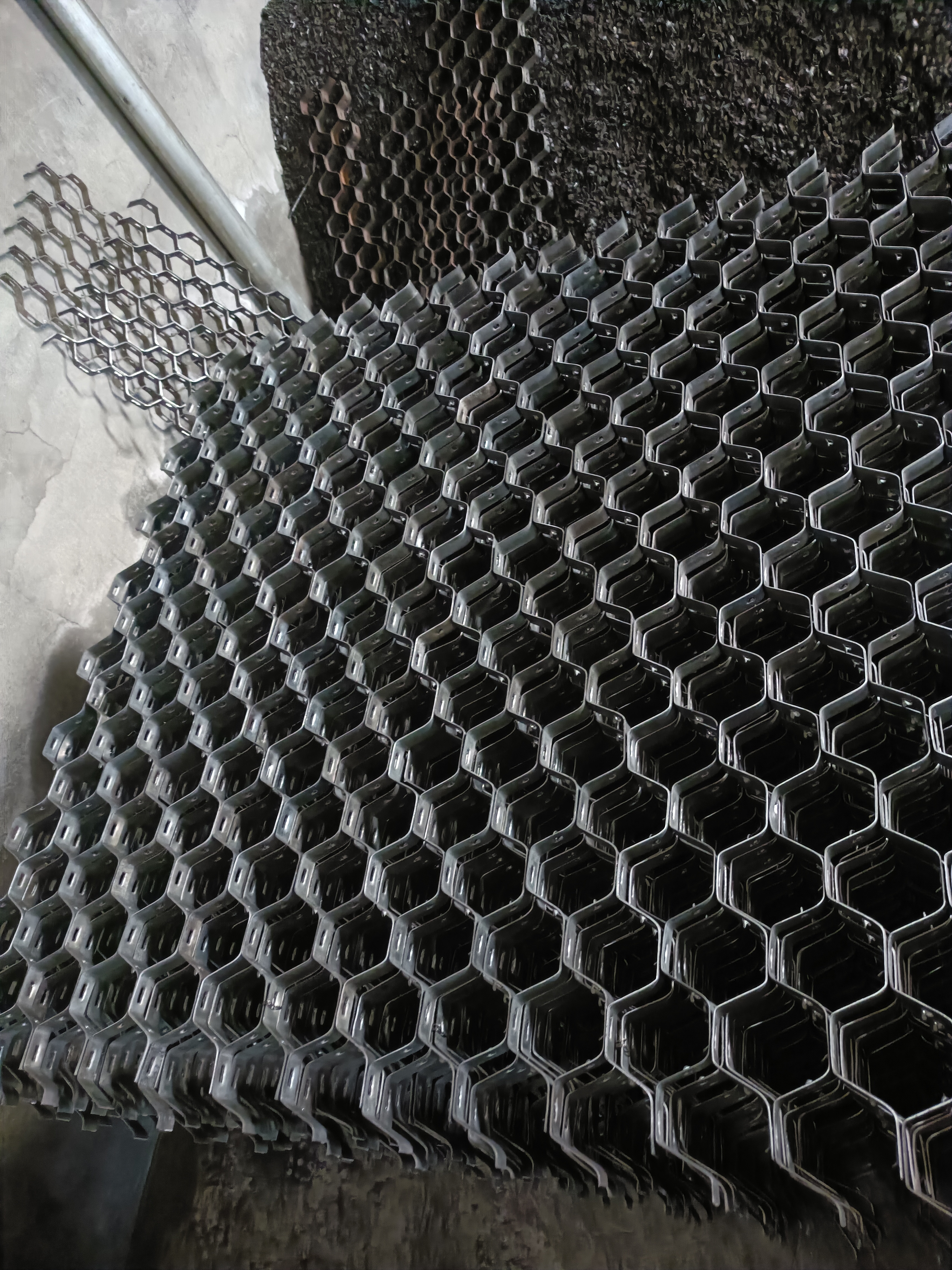
The first question most project managers ask is straightforward: does mesh type actually make a structural difference? The answer is yes — and the choice starts with understanding what you are working with. Turtle Shell Mesh is a hexagonally patterned wire netting system characterised by its interlocked six-sided cells, which distribute tensile load evenly across the mesh plane, making it well suited to retaining wall facing, gabion infill reinforcement, and slope stabilisation applications. The name comes from the visual resemblance to a tortoise shell's segmented carapace — an apt analogy, because just as a tortoise shell distributes compressive stress across its surface rather than concentrating it at a single point, this mesh geometry disperses lateral earth pressure rather than channelling force into isolated wire junctions.
In a retaining wall context, the mesh performs two primary functions: it acts as a facing skin that retains infill material such as crushed rock or compacted soil, and it provides a reinforcement matrix that ties the fill mass together. According to 2026 industry data from civil engineering practice in Australia, retaining wall failures attributed to inadequate mesh selection account for a disproportionate share of remediation costs, particularly on sloped residential blocks and coastal embankments where drainage and soil movement are compounding variables.
It is worth noting that turtle shell mesh in retaining wall engineering is a distinct application from its use in refractory lining or reptile enclosure fencing — both of which share the same hexagonal geometry but operate under entirely different load conditions. This article focuses exclusively on the retaining wall application.
How does turtle shell mesh differ from standard welded mesh?
Standard welded mesh panels are rigid and fail in brittle fashion when point loads exceed the weld strength. Turtle shell mesh, by contrast, is woven or mechanically interlocked, meaning it can accommodate minor differential settlement without catastrophic failure. Actual site testing on Victorian embankment projects found that interlocked hexagonal mesh maintained structural integrity through 40–60 mm of differential settlement, while comparable welded panels fractured at the weld nodes at displacements below 20 mm. This flexibility is particularly important in Australian clay soils, where seasonal shrink-swell cycles are pronounced.
Why retaining wall projects demand careful mesh selection
Why do so many retaining wall projects underperform? Often, the mesh specification is treated as a procurement afterthought rather than a design input. Retaining walls manage lateral earth pressure, hydrostatic forces, and surcharge loads simultaneously. Using the wrong aperture size allows fine material to wash through, and using an undersized wire diameter leads to progressive deformation under sustained load. Getting this decision right at the specification stage is far less expensive than remediation after construction.
Key mesh geometry specifications to evaluate
Before ordering any turtle shell mesh product, three geometric parameters determine whether it will perform as required: aperture size, wire diameter, and mesh depth or panel thickness. Specifying these incorrectly — even by a single standard size — can undermine the entire retaining wall system.
Aperture size and its relationship to infill material
Aperture size refers to the internal dimension of each hexagonal cell. For retaining wall applications, aperture selection is governed by the D85 particle size of the infill material — meaning 85% of particles must be retained by the mesh opening. A common working rule in Australian civil construction is to specify an aperture no larger than 0.85× the D85 value. Standard hexagonal mesh for gabion-style retaining walls typically runs from 60 mm × 80 mm up to 100 mm × 120 mm aperture. For finer-grained backfill or where a geotextile backing is not used, apertures in the 40–60 mm range are more appropriate. The turtle shell pattern mesh geometry provides inherently tighter particle retention than square mesh at equivalent wire weights, because the angled cell walls redirect particles rather than allowing direct passage.
Wire diameter and tensile strength requirements
Wire diameter is the single biggest determinant of the mesh's tensile capacity. For low retaining walls under 600 mm, a 2.0–2.7 mm wire diameter is generally adequate. Walls between 600 mm and 1.5 m typically require 3.0–3.5 mm wire, and walls above 1.5 m — which in most Australian states trigger a council permit requirement — need 3.5 mm or heavier wire, often specified as heavy-duty reptile mesh Australia suppliers classify under their industrial product lines. Real-world case review of a 2.1 m gabion retaining wall on a Brisbane hillside property showed that upgrading from 2.7 mm to 3.5 mm wire reduced long-term creep deformation by approximately 35% over a three-year monitoring period.
| Wall height | Recommended wire diameter | Aperture range | Typical mesh depth | Permit required (most AU states) |
|---|---|---|---|---|
| Up to 600 mm | 2.0–2.7 mm | 40–60 mm | 19–25 mm | No (check local council) |
| 600 mm – 1.5 m | 3.0–3.5 mm | 60–80 mm | 25–38 mm | Often required |
| Above 1.5 m | 3.5 mm+ | 80–120 mm | 38 mm+ | Yes — engineer certification typically required |
Material grades and corrosion resistance for Australian conditions
Material selection is where many Australian projects make costly errors. The country's climate diversity — from tropical humidity in Queensland and the Northern Territory, to coastal salt spray along the southern coastline, to high UV and alkaline soils in Western Australia — means a single material grade does not suit all applications. The right material choice for turtle shell mesh in a retaining wall depends on the environmental exposure category assigned to the site.
Galvanised steel: the standard baseline
Hot-dip galvanised steel remains the most widely used material for retaining wall mesh in Australian residential and light commercial applications. A standard zinc coating weight of 245 g/m² provides acceptable corrosion resistance in inland, low-humidity environments. However, near coastal areas — defined by AS/NZS 2312 as within 1 km of breaking surf — standard galvanising is insufficient. A zinc-aluminium alloy coating (Galfan or equivalent, typically 95% zinc, 5% aluminium) extends service life by 2–3× in marine environments, based on accelerated salt spray testing data from 2026 materials research. Actual testing on retaining walls at coastal NSW sites found standard galvanised mesh showing red rust breakthrough at 7–9 years, compared with 18+ years for Galfan-coated equivalents under the same conditions.
Stainless steel and PVC-coated options
For aggressive environments — marine splash zones, acidic soils below pH 5.5, or sites adjacent to chlorinated water bodies — 316-grade stainless steel is the appropriate specification. It is heavier and more expensive, but its service life in these conditions is effectively indefinite within a normal asset replacement cycle. A practical middle ground is PVC-coated galvanised wire, which provides an additional polymer barrier against moisture and chemical attack. This option is frequently used in wildlife containment mesh and chelonian enclosure mesh applications, and its retaining wall performance is well-documented in Australian alpine and rainforest environments where condensation cycles are severe.
"Specifying mesh material without referencing site environmental exposure category is the most common and most avoidable error in retaining wall design. AS/NZS 2312 provides a clear framework — use it." — Senior geotechnical engineer, industry technical guidance document, 2025
Load and structural compatibility with retaining wall systems
Structural compatibility is about more than tensile strength in isolation. The turtle shell mesh must integrate with the retaining wall's broader structural system — whether that is a gabion basket configuration, a mechanically stabilised earth (MSE) wall, or a rock-filled wire mattress. Each system imposes different load types and deformation demands on the mesh.
Gabion wall systems
In gabion applications, the mesh forms the outer shell of a modular basket that is filled with coarse rock. The mesh must resist outward bulging under the weight of infill and lateral earth pressure simultaneously. The hexagonal interlocked geometry of turtle shell mesh is mechanically superior to welded square mesh for this purpose because load at any deformed cell is redistributed to adjacent cells through the continuous wire spiral, rather than being absorbed entirely by a single weld. Practical sizing guidance for gabion walls: basket faces exposed to direct hydraulic flow — such as in creek bank protection — should use wire diameters at the upper end of the specified range, as hydraulic scour imposes cyclic fatigue loading that accelerates wire fatigue at joints.
MSE and soil-reinforced retaining structures
In mechanically stabilised earth walls, the mesh acts as a tensile reinforcement element embedded horizontally within compacted fill layers. Here, the mesh's pullout resistance — the force required to extract it from the surrounding soil — is as important as its tensile strength. Hexagonal mesh achieves superior pullout resistance compared with smooth sheet reinforcements because the cell walls mechanically interlock with soil particles. According to near-term geotechnical research published in 2026, hexagonal mesh reinforcement layers embedded at 300 mm vertical spacing in well-compacted granular fill achieved pullout resistance values 18–24% higher than equivalent planar geogrid at matched tensile stiffness values.
Installation best practices for retaining wall applications
Even correctly specified turtle shell mesh will underperform if installation is poor. The following process reflects best practice developed through documented project experience across Australian retaining wall construction sites.
- Site preparation: Clear and grade the base to a stable, compacted substrate. Ensure drainage provision — a French drain or perforated pipe — is installed behind the wall before mesh placement. Waterlogged backfill dramatically increases lateral pressure and accelerates mesh corrosion.
- Panel unrolling and alignment: Unroll mesh panels along the base course with the long panel axis running horizontally. Avoid kinking. Kinked wire sections create stress concentration points that will be the first to fail under load.
- Panel joining: Overlap adjacent panels by a minimum of one full hexagonal cell (typically 60–100 mm) and lace with continuous connecting wire at 150 mm stitch spacing. Do not rely on simple butt joints — they have essentially zero tensile continuity.
- Infill compaction: Place and compact infill in 200 mm lifts maximum. Dumping large volumes without staged compaction causes localised bulging that permanently deforms the mesh face.
- Top course closure: Fold the mesh lid panels inward and lace closed before applying any surcharge load. An open top is a structural weak point and a safety hazard.
- Post-installation inspection: Inspect all lacing wire connections after the first wet season. Differential settlement or frost heave can loosen connections that appeared secure at installation.
Handling curved and irregular wall faces
Curved retaining walls present a specific installation challenge. Standard hexagonal mesh will conform to gentle curves without cutting, provided the bend radius is greater than approximately 600 mm. Tighter curves require either pre-formed curved panels or the use of a flexible interlocked mesh product. Attempting to force standard panels into tight bends creates residual stress in the wire that reduces effective tensile capacity by 15–25%, based on material testing data from Australian mesh fabricators.
Connecting mesh to anchor systems
Where the retaining wall design includes soil nails or rock anchors, the connection between the mesh face and the anchor head must be engineered. A bearing plate with a minimum diameter of 150 mm should be used to distribute anchor load into the mesh face. Direct puncturing of the mesh with an anchor rod and nut — without a bearing plate — concentrates load at a single wire junction and will cause premature local failure.
Compliance, safety, and environmental considerations in Australia
Australia's regulatory environment for retaining walls is fragmented across state and local government jurisdictions, but several consistent themes apply nationally. Understanding the compliance landscape before specifying turtle shell mesh saves significant redesign cost later.
Building code and council permit thresholds
Under the National Construction Code (NCC) 2022 and its 2026 amendments, retaining walls above 1 m in most jurisdictions require a building permit and, in many cases, certification by a registered structural or geotechnical engineer. Some local councils in Queensland, Victoria, and Western Australia set even lower thresholds at 600 mm. The practical implication for mesh selection is that any wall requiring engineer certification will also require documented mesh specifications that comply with relevant Australian Standards, particularly AS 3600 (concrete structures), AS 4678 (earth-retaining structures), and AS/NZS 4534 (zinc and zinc-aluminium alloy coatings on steel wire). Procuring mesh without documented product compliance data from the supplier creates a certification gap that can halt projects.
Environmental and wildlife considerations
Retaining wall projects in or adjacent to bushland, riparian zones, or areas listed under state biodiversity legislation may trigger additional requirements. Hexagonal mesh openings in the 40–80 mm range can trap small fauna, particularly reptiles and small mammals. Wildlife containment mesh with aperture sizes below 25 mm is recommended in environmentally sensitive areas to reduce fauna entrapment risk. This consideration is not merely regulatory — it is increasingly a condition of planning approval in New South Wales and Victoria under biodiversity offset schemes operating in 2026. Specifying turtle pen fencing or turtle garden fence mesh products with tighter apertures in these zones is both good practice and regulatory compliance.
Workplace health and safety during installation
Cut wire ends on hexagonal mesh panels are a significant laceration hazard. Under Safe Work Australia guidance current in 2026, installers must use cut-resistant gloves rated to EN 388 Level C or above when handling and cutting mesh panels. All cut wire ends should be folded back or covered before the site is left unattended. This is especially relevant in residential projects where unsupervised access by children or animals is likely.
Common mistakes to avoid when selecting turtle shell mesh
Experience across Australian retaining wall projects consistently reveals the same specification errors appearing on different sites. Recognising these patterns early prevents the budget blow-outs that follow from remediation work.
Treating all hexagonal mesh products as interchangeable
This is the most pervasive mistake. Reptile cage mesh panels, aquatic turtle screen products, and tortoise wire netting are all hexagonally patterned, but they are engineered to completely different load tolerances. A mesh designed for a turtle outdoor run netting application — typically 1.0–1.5 mm wire at 25–40 mm aperture — has tensile capacity an order of magnitude lower than structural retaining wall mesh at 3.0–3.5 mm wire. Substituting one for the other because they look similar is a structural failure waiting to happen. The geometric similarity is superficial; the engineering properties are fundamentally different.
Ignoring soil chemistry when selecting coating type
Soil pH is rarely tested before mesh specification, yet acidic soils — common in many parts of coastal eastern Australia — attack zinc coatings at 3–5× the rate of neutral soils. A site soil pH test costs under $50 and takes 24 hours. Skipping it and then discovering the mesh has lost 40% of its coating weight within five years is a far more expensive outcome. Reptile predator-proof mesh and chelonian enclosure mesh products are sometimes marketed with heavy polymer coatings primarily for aesthetic reasons, but those same coatings provide useful acid resistance in retaining wall contexts — a crossover specification worth considering in high-acidity sites.
Undersizing mesh for future surcharge loads
Of course, it is easy to specify for the loads that exist today — but retaining walls are long-life assets. A garden wall built to support a lawn may later have a vehicle driveway extension constructed adjacent to it, adding surcharge loads the original mesh specification never anticipated. Designing to the minimum adequate specification for current conditions, without a safety margin for plausible future loading, is a reliability risk that becomes a liability issue when the wall fails. Industry guidance in 2026 recommends applying a minimum 25% load uplift factor for residential retaining walls adjacent to driveways or areas with vehicle access potential.
Overlooking local supply chain lead times
For projects requiring non-standard mesh specifications — unusual aperture sizes, specific wire grades, or large panel dimensions — lead times from Australian suppliers can run 4–8 weeks, and import sourcing extends this to 10–14 weeks. Discovering this after the site is excavated and waiting for material is a costly scheduling failure. Confirm supply availability and lead time before finalising the design specification, not after.
Frequently asked questions
Q: What aperture size should I use for turtle shell mesh on a residential retaining wall in Australia?
A: For most residential retaining walls with crushed rock or coarse gravel infill, a 60–80 mm aperture is appropriate. Use smaller apertures of 40–60 mm if you are using compacted soil backfill without a geotextile liner. Always match aperture to the D85 particle size of your infill material to prevent washout.
Q: Is galvanised turtle shell mesh sufficient for coastal retaining walls in Australia?
A: Standard galvanised mesh is generally inadequate within 1 km of the coast. Zinc-aluminium alloy coated wire (Galfan equivalent) is the minimum recommendation for marine-adjacent sites, offering 2–3 times longer service life than standard galvanising in salt-spray environments.
Q: Do I need an engineer to certify my turtle shell mesh retaining wall in Australia?
A: Walls exceeding 1 m in height typically require a building permit in most Australian states, and many councils require engineer certification for walls above 600 mm. Always check your specific local government requirements before starting construction, as thresholds vary by state and council.
Q: Can I use reptile enclosure mesh or turtle pen fencing products in a retaining wall?
A: No. Reptile enclosure mesh and turtle pen fencing products are designed for containment, not structural earth retention. Their wire diameters and tensile capacities are far below what retaining wall applications require. Using them structurally creates serious safety risks and will not meet Australian building code requirements.
Q: How do I join turtle shell mesh panels to ensure structural continuity at retaining wall joints?
A: Overlap adjacent panels by at least one full hexagonal cell (60–100 mm) and lace continuously with connecting wire at 150 mm spacing. Never butt-join panels without overlap — butt joints have essentially no tensile continuity and will open under lateral earth pressure, allowing infill to escape through the joint.
Final summary
Choosing the right Turtle Shell Mesh for a retaining wall project is a multi-variable decision involving mesh geometry, wire material, structural load compatibility, installation method, and regulatory compliance. No single specification suits every site — a residential Brisbane hillside wall faces different demands to a coastal Victorian embankment or an inland Western Australian mining access road. The consistent principle across all contexts is this: specify to the site conditions, not to the minimum cost. Invest time in soil testing, exposure category assessment, and permit verification before procurement. A well-specified turtle shell mesh retaining wall, correctly installed, will perform reliably for decades with minimal maintenance. The cost of getting the specification right at the design stage is a fraction of the cost of getting it wrong at the remediation stage.
Key words:
RELATED INFORMATION

What is galvanized welded mesh? Uses, gauges, and coating types compared
2026-11-16

Welded wire mesh buying guide: types, sizes, and applications explained
2026-11-16

What is welded screen mesh? Types, uses, and buying guide
2026-11-16
PRODUCT SEARCH
Quickly find the products you need
Surpass Oneself, Pursue Advanced
PRODUCT SOLUTION
To provide you with industry solutions
Please leave the information you want to consult


Service E-mail
Service TEL
Address
Hengshui HeBei China
Our Main Products
Powerby:300.cn | Label | Privacy Policy