How to choose the right tortoise shell metal mesh panel for your project
2026-11-09
Fangzhan Metal
Article overview
This guide explains how to choose the right tortoise shell metal mesh panel for industrial and architectural projects, covering material selection, specification matching, compliance requirements, and supplier evaluation — with data-backed comparisons and a practical step-by-step framework.
Table of contents
- 1. What is a tortoise shell metal mesh panel?
- 2. How to identify the right material grade for your application
- 3. How to match panel specifications to your project requirements
- 4. Industrial versus decorative applications: making the right call
- 5. How to evaluate supplier quality and compliance documentation
- 6. Step-by-step selection process for tortoise shell metal mesh panels
- 7. Common mistakes to avoid when specifying metal mesh panels
- 8. FAQ
What is a tortoise shell metal mesh panel?
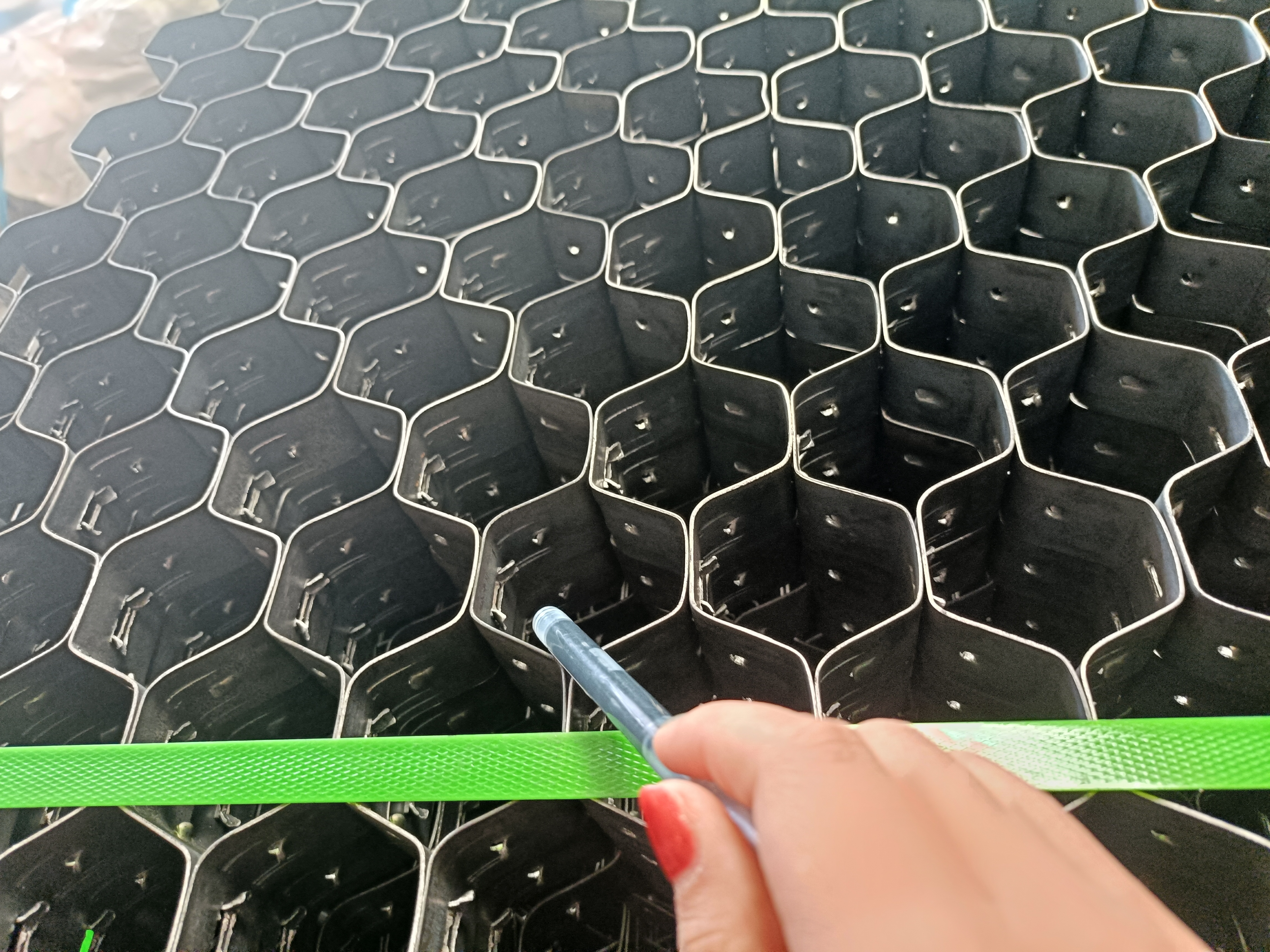
A tortoise shell metal mesh panel is a rigid, integrally stamped metal sheet featuring hexagonal raised nodes that replicate the geometric pattern of a tortoise shell, used as a structural anchor mesh for refractory linings or as a decorative architectural screen element. The panel's distinctive hexagonal geometry is not merely aesthetic — it creates interlocking mechanical bonds that hold cast refractory or wear-resistant materials firmly in place under thermal cycling and mechanical stress.
The structure itself is formed through a single cold-stamping and stretch-forming operation on flat metal sheet, which means there are no welds at the nodal intersections. This one-piece construction is what distinguishes a genuine tortoise shell panel from a conventional woven wire mesh partition or a simple perforated metal decorative screen. The stamped nodes distribute load uniformly, which is a critical property in high-temperature industrial environments.
Tortoise Shell Metal Mesh Panel is a category of metal mesh product also known in the industry as Hexsteel or hexagonal anchor mesh, widely specified in petrochemical reactors, rotary kilns, incinerators, and — increasingly in 2026 — architectural interior applications such as metal mesh feature walls, suspended metal mesh ceiling panels, and geometric metal screen dividers.
Why the hexagonal node geometry matters
The hexagonal pattern is not arbitrary. A true hexagonal grid is the most material-efficient tessellation that completely covers a plane surface — a principle mathematically proven and practically validated in engineering structures. In practical terms, this means the tortoiseshell pattern metal screen can achieve high surface coverage ratios while minimising raw material consumption per square metre. According to refractory engineering consensus, a hexagonal anchor mesh with node pitch between 30 mm and 50 mm provides optimal keying depth for castable refractories up to 150 mm thick.
The dual identity of this panel type
Here is a question worth asking early: are you buying this panel for its structural anchor function or its visual pattern? Many procurement teams fall into the trap of specifying the same product for both uses without adjusting grade, finish, or geometry. Industrial-grade panels prioritise node height, steel thickness, and heat resistance. Architectural-grade variants — often finished as a bronze mesh architectural panel or a brass mesh wall panel — prioritise surface coating quality, dimensional consistency, and visual uniformity. Recognising this dual identity from the outset prevents costly specification errors downstream.
How to identify the right material grade for your application
Material selection is the single most consequential decision in the entire specification process. Get this wrong and no amount of correct sizing or careful installation will save the project. The primary variable is operating temperature, followed by chemical exposure and mechanical load.
Carbon steel versus stainless steel grades
Q235 carbon steel (hot-dip galvanised) is the standard specification for ambient-temperature decorative applications — think metal lattice room dividers, patterned metal cladding panels, and interior metal grille panels in commercial interiors. It is cost-effective and weldable, but its upper service limit is approximately 400°C before oxidation becomes a structural liability. For moderate-temperature industrial zones — stack linings, duct systems, fluidised bed combustors operating below 700°C — grade 304 stainless steel is the mainstream choice. It offers good corrosion resistance and reasonable oxidation resistance within that band.
A common industry misconception, however, is that "stainless steel equals high-temperature performance." This is dangerously incomplete. Grade 304 begins to scale and lose structural integrity above 800°C under sustained service conditions. For high-temperature applications — petrochemical reformers, rotary kiln linings, incinerator walls — grade 310S (also designated 2520, referring to its 25% chromium and 20% nickel content) is the authoritative specification. The additional alloying elements form a stable chromium oxide layer that resists scaling up to approximately 1100°C continuously.
| Grade | Max. service temp. | Corrosion resistance | Typical application | Relative cost index |
|---|---|---|---|---|
| Q235 (galvanised) | ≤ 400°C | Low–moderate | Decorative screens, partitions | 1.0× |
| 304 Stainless steel | ≤ 800°C | Good | Moderate industrial linings | 2.2× |
| 316L Stainless steel | ≤ 850°C | Excellent (chloride env.) | Coastal/marine industrial | 2.8× |
| 310S (2520) | ≤ 1100°C | Very good | Petrochemical, kiln, incinerator | 4.5× |
Special considerations for Thailand's coastal and petrochemical environments
Thailand's Map Ta Phut industrial estate — home to over 151 petrochemical and heavy industrial facilities according to IEAT and Wikipedia public records — presents a dual challenge: high-temperature process conditions combined with coastal chloride exposure. In this environment, standard 304 is frequently under-specified. Real-world inspection data from comparable Southeast Asian petrochemical facilities consistently shows accelerated pitting corrosion on 304 anchor mesh panels within three to five years of service in chloride-rich atmospheres. Grade 316L offers meaningfully better resistance in these conditions. For the highest-temperature zones within the same facility, 310S remains non-negotiable.
How to match panel specifications to your project requirements
Once material grade is confirmed, the next layer of decisions involves geometric and dimensional specifications. These are not merely catalogue choices — each parameter has a direct engineering consequence.
Sheet thickness and node pitch
Panel thickness typically ranges from 1 mm to 3 mm, and node pitch (centre-to-centre distance between hexagonal nodes) ranges from 30 mm to 100 mm. The relationship between these two variables and the refractory lining thickness is what engineers call the "anchor geometry match." Industry consensus establishes that node height should be no less than 40% of the intended refractory lining thickness to ensure adequate mechanical keying. A 75 mm castable lining, for instance, requires nodes of at least 30 mm height. Using a panel with insufficiently tall nodes is one of the leading causes of refractory delamination — a failure mode that is costly and potentially hazardous in live industrial plant.
V-type and Y-type anchor configurations
Beyond the base hexagonal mesh, many industrial specifications include integrated V-type or Y-type anchor studs welded or stamped onto the mesh surface. These increase the effective pull-out resistance of the refractory lining by a factor of approximately 1.8 to 2.4 compared to mesh alone, based on pull-out test data from refractory engineering literature. For architectural decorative metal screen panels or metal privacy screen panels, these anchor configurations are irrelevant — what matters instead is the flatness tolerance of the panel (typically ±1.5 mm across a 1,000 mm span) and the uniformity of surface coating.
Panel size and modularity
Standard panel dimensions from most manufacturers run 1,000 mm × 2,000 mm or 1,220 mm × 2,440 mm, with custom sizes available at longer lead times. For large-scale architectural applications — an architectural wire mesh facade or a continuous stainless steel decorative grille system — modular sizing is critical to minimise field cutting, which can distort the hexagonal pattern and compromise visual consistency. Industrial purchasers, by contrast, often specify panels to match vessel internal dimensions, requiring non-standard widths that must be confirmed with the manufacturer before order placement.
Industrial versus decorative applications: making the right call
The tortoise shell metal mesh panel occupies an unusual position in the materials market — it is simultaneously a heavy industrial consumable and a premium architectural finish element. These two application worlds have almost no overlapping specification requirements. Treating them as interchangeable is, surprisingly, one of the most persistent errors encountered in actual project procurement.
Industrial refractory anchor applications
In petrochemical reactors, rotary kilns, and waste incinerators, the panel's primary function is structural. It acts as a load-bearing skeleton that holds the refractory castable in place against thermal shock, vibration, and process gas pressure. The relevant performance criteria are node pull-out strength, thermal expansion compatibility between the mesh and the refractory material, and the long-term oxidation resistance of the base metal. Surface appearance is irrelevant. What matters is dimensional accuracy, metallurgical certification, and the ability to withstand cyclic thermal loading without fatigue cracking at node roots.
"The anchor mesh is not a passive component — it is the primary load transfer mechanism between the refractory lining and the vessel shell. Specifying it as a commodity item without engineering review is the single most common cause of premature lining failure in high-temperature industrial plant." — Refractory Engineering Industry Consensus, 2026 technical review literature
Architectural and interior design applications
At the opposite end of the spectrum, the tortoiseshell pattern's visual appeal has driven significant adoption in commercial interiors and facades. Think of it like a jeweller's lattice work scaled up to architectural dimensions — the repeating hexagonal geometry creates rhythm and depth on surfaces that flat panels cannot achieve. Applications include metal mesh feature walls in hotel lobbies and retail environments, metal mesh ceiling panels in commercial developments, woven wire mesh partitions used as spatial dividers in open-plan offices, and exterior patterned metal cladding panels on building facades.
For these applications, the key specification parameters shift entirely. Surface finish — whether powder-coated, PVD-coated to simulate a bronze mesh architectural panel or an antique brass tone, anodised, or mill-finish — becomes the primary quality criterion. Flatness, coating adhesion, and UV resistance in Thailand's tropical climate are the engineering concerns that drive material selection here. Of course, even in purely decorative contexts, the base metal's corrosion resistance must be adequate for the installation environment, particularly in coastal locations or air-conditioned interiors with high humidity cycling.
How to evaluate supplier quality and compliance documentation
In 2026, Thailand's EEC expansion and Map Ta Phut petrochemical sector growth have driven a notable shift in how tortoise shell metal mesh panels are procured. The market has moved decisively from transactional "buy the panel" sourcing to integrated supply packages that include material certification, anchor component sets, and technical installation guidance. Suppliers who cannot provide documentation are increasingly disqualified at the RFQ stage by Thai industrial purchasers — a trend that mirrors procurement practices in Europe and Japan that have been standard for over a decade.
Essential documentation checklist
Before placing any order — whether for industrial or architectural use — the following documentation should be requested as a baseline. Absence of any of these items is a material risk signal:
- Mill test certificate (MTC) confirming chemical composition and mechanical properties to the specified grade
- Third-party dimensional inspection report for node height, pitch, and sheet thickness
- Compliance statement for applicable standards (ASTM, EN, or JIS as appropriate)
- Surface coating adhesion test report (for architectural panels)
- High-temperature oxidation test data at the specified service temperature (for industrial panels)
- Country of origin documentation and HS code confirmation for Thai customs clearance
Lead time and import logistics for Thailand-based projects
A point that consistently catches Thai project managers off guard: virtually no tortoise shell metal mesh panel is stocked locally. The vast majority of supply originates from manufacturing clusters in China, with standard lead times of 25 to 35 days from order confirmation to port of departure, plus 7 to 14 days sea transit to Laem Chabang or Bangkok port. Factor in customs clearance and inland logistics and the realistic door-to-site timeline is 45 to 55 days. Projects that fail to account for this lead time — particularly maintenance shutdowns at Map Ta Phut facilities with fixed turnaround windows — routinely face costly schedule overruns. Minimum order quantities typically start at 100 m² for standard grades, which must also be reflected in budget planning.
Step-by-step selection process for tortoise shell metal mesh panels
Bringing together all the variables discussed above, here is a structured sequence for specifying the right panel for any project type. Following this process in order prevents the most common and costly errors.
- Define the application category first. Confirm whether the panel serves a structural refractory anchor function or a decorative/architectural function. Do not mix specification criteria from both categories.
- Establish the operating environment. For industrial use, document the maximum continuous service temperature, cyclic temperature range, presence of chemical corrodents, and mechanical load conditions. For architectural use, document the installation environment (interior/exterior, coastal proximity, humidity levels).
- Select the material grade. Use the temperature and chemical exposure data to select between Q235 galvanised, 304, 316L, or 310S stainless steel. Default to the higher grade if there is uncertainty about peak temperatures.
- Specify node geometry. For industrial panels, calculate the required node height based on the planned refractory thickness (node height ≥ 40% of lining thickness). For decorative panels, select node pitch based on the desired visual scale of the hexagonal pattern at the viewing distance.
- Confirm panel dimensions and quantity. Calculate the total area including installation overlaps (typically 50 mm per joint for industrial installation) and wastage allowance (5–8% for standard installations, up to 12% for curved or complex geometries).
- Request and review supplier documentation. Obtain MTC, dimensional reports, and compliance certificates before issuing a purchase order. Verify that the supplier can provide a packing list and commercial invoice formatted for Thai customs clearance.
- Build the project schedule backward from the required on-site date. Allow a minimum of 55 days from order confirmation to site delivery for imported panels. Identify any domestic stock alternatives if the timeline is compressed.
Common mistakes to avoid when specifying metal mesh panels
Even experienced procurement engineers make specification errors with tortoise shell metal mesh panels. Why? Because the product category sits at an unusual intersection of industrial engineering and architectural design, and standard procurement checklists rarely cover both dimensions adequately.
Treating the panel as a commodity item
The most consequential mistake is awarding supply to the lowest bidder without verifying material grade. A 304 panel priced identically to a 310S quotation is not a bargain — it is a liability. In high-temperature service, using the wrong grade leads to accelerated oxidation, node failure, and refractory delamination within the first operating cycle. Actual case data from refractory maintenance engineers in comparable Southeast Asian facilities documents repair costs that routinely exceed the original panel procurement cost by a factor of six to ten, once downtime and emergency labour are included.
Ignoring thermal expansion compatibility
A subtler but equally serious error is failing to match the thermal expansion coefficient of the mesh to the refractory castable. Carbon steel expands at approximately 12 × 10⁻⁶ /°C, while high-alumina castable refractories typically expand at 5–7 × 10⁻⁶ /°C. This mismatch is manageable in low-temperature applications but becomes structurally critical above 600°C, where differential expansion induces tensile stress at the node-refractory interface. Selecting a mesh alloy whose expansion coefficient more closely matches the refractory system — or incorporating deliberate expansion relief joints at regular intervals — is standard engineering practice that is frequently overlooked in non-specialist procurement processes.
Neglecting installation quality
Even a perfectly specified tortoise shell metal mesh panel will underperform if installed incorrectly. The most common installation failure mode is inadequate stud welding at the perimeter, which allows the panel to lift and create voids in the refractory. For architectural panels used as interior metal grille panels or metal privacy screen panels, incorrect framing specifications — particularly insufficient depth to accommodate the node height — result in contact stress that flattens the hexagonal geometry and destroys the visual effect. Supplier technical support and clear installation drawings should be mandatory deliverables for any project, not optional extras. When choosing a tortoise shell metal mesh panel for your project, factor installation support into the supplier evaluation as heavily as you factor price.
Frequently asked questions
Q: What is the difference between a tortoise shell metal mesh panel and a standard perforated metal sheet?
A: A tortoise shell metal mesh panel is formed by stamping and stretching a solid sheet to create three-dimensional raised hexagonal nodes, giving it structural depth and anchor keying capability. A standard perforated metal sheet has flat, punched holes with no node relief. The three-dimensional geometry of the tortoise shell panel is what enables it to mechanically lock refractory materials or create visual depth in architectural applications that flat perforation cannot replicate.
Q: Can the same panel specification be used for both industrial refractory anchoring and decorative architectural applications?
A: Rarely. Industrial panels prioritise metallurgical grade, node pull-out strength, and thermal performance. Decorative architectural panels prioritise surface finish quality, flatness tolerance, and coating durability. While the geometric form is similar, specifying an industrial-grade panel for a decorative application wastes cost, and specifying an architectural-finish panel for high-temperature industrial use creates a serious structural safety risk. Separate specifications are strongly recommended.
Q: What material grade should I specify for a tortoise shell metal mesh panel in a coastal Thai industrial facility?
A: For coastal environments combined with moderate industrial temperatures below 850°C, grade 316L stainless steel is the recommended minimum specification due to its superior chloride corrosion resistance compared to 304. For high-temperature zones within the same facility above 850°C, upgrade to grade 310S. Using 304 in chloride-rich coastal environments significantly shortens service life and increases total lifecycle maintenance costs.
Q: How long does it take to import tortoise shell metal mesh panels to Thailand from overseas manufacturers?
A: Based on 2026 supply chain conditions, the realistic door-to-site timeline from a Chinese manufacturer to a Thai project site is 45 to 55 days: approximately 25–35 days production lead time, 7–14 days sea freight to Laem Chabang, plus customs clearance and inland transport. Projects in Thailand with fixed maintenance windows must initiate procurement at least eight weeks before the required on-site date to avoid schedule risk.
Q: What is the minimum order quantity for tortoise shell metal mesh panels, and how does it affect project budgeting?
A: Standard minimum order quantities start at approximately 100 m² for common grades, based on 2026 manufacturer reference data. For small repair or sample projects below this threshold, the per-unit cost increases significantly and some suppliers may decline to quote. Budget planning should account for the MOQ requirement alongside the total required area, ensuring that any quantity buffer for wastage and future maintenance does not push the order below the MOQ floor.
Summary
Choosing the right tortoise shell metal mesh panel is a multi-variable engineering decision, not a commodity purchasing exercise. The process begins with correctly identifying whether the application is industrial or architectural, proceeds through material grade selection based on temperature and corrosion conditions, and is completed by matching geometric specifications to structural or visual requirements. For projects in Thailand — whether in the Map Ta Phut petrochemical corridor or a Bangkok commercial interior — the additional dimensions of import logistics, compliance documentation, and local environmental conditions add layers of complexity that demand early-stage planning. Applied systematically, the selection framework presented in this guide reduces specification risk, prevents the most common failure modes, and ensures that the panel performs as intended for the full design life of the project.
Key words:
RELATED INFORMATION

What is galvanized welded mesh? Uses, gauges, and coating types compared
2026-11-16

Welded wire mesh buying guide: types, sizes, and applications explained
2026-11-16

What is welded screen mesh? Types, uses, and buying guide
2026-11-16
PRODUCT SEARCH
Quickly find the products you need
Surpass Oneself, Pursue Advanced
PRODUCT SOLUTION
To provide you with industry solutions
Please leave the information you want to consult


Service E-mail
Service TEL
Address
Hengshui HeBei China
Our Main Products
Powerby:300.cn | Label | Privacy Policy