Grid plate buying guide: how to choose the right size and material for your project
2026-09-24
Fangzhan Metal
Article overview
This guide provides a complete technical and commercial reference for sourcing, specifying, and maintaining industrial grid plates. It is written for engineers, CNC machinists, and procurement professionals evaluating suppliers in 2026. Sections cover material science, dimensional standards, fixturing workflows, maintenance protocols, and total cost of ownership.
Table of contents
- 1. What is a grid plate?
- 2. Material comparison: aluminum 6061 vs. steel vs. cast iron
- 3. How to choose the right hole spacing and plate dimensions
- 4. Step-by-step: how to set up and fixture a workpiece on a grid plate
- 5. Grid plate maintenance and restoring flatness
- 6. 2026 trends shaping the grid plate market
- 7. FAQ
What is a grid plate?
A grid plate is a flat, precision-engineered panel featuring a regular array of threaded or through holes arranged in a defined pitch pattern, used as a universal fixturing surface for machining, metrology, and structural applications. Unlike a standard perforated metal sheet — which prioritizes airflow or weight reduction — a grid plate is manufactured to tight flatness and positional tolerances so that clamps, dowel pins, and modular fixture components can be located accurately and repeatably.
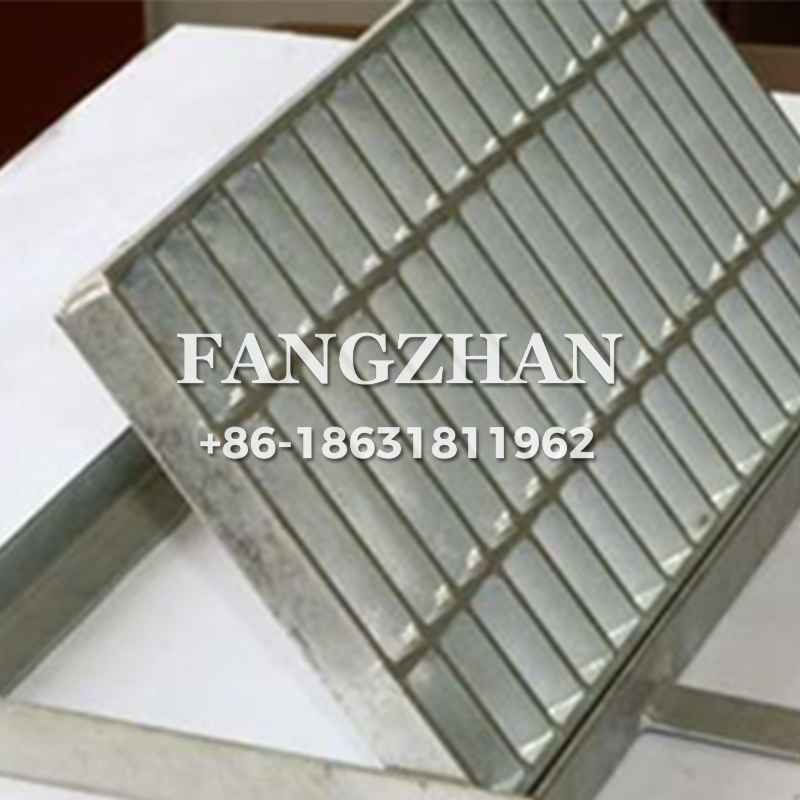
The term spans several industries. In a machine shop context, it functions as a structural grid system that replaces custom fixtures with a reconfigurable modular grid panel. In civil and industrial construction, the same phrase describes a steel grid plate or aluminum grid plate used as industrial floor grating, drain cover plate, or ventilation grid plate. And in battery manufacturing, grid plate refers to the current-collecting lattice inside a lead-acid cell. Throughout this guide, the focus is on precision tooling and industrial-structural variants, because that is where the sharpest buying decisions — and the most costly specification errors — actually occur.
Why do so many buyers get this wrong? They conflate load-bearing bar grating with precision fixturing surfaces, order the wrong flatness grade, and end up scrapping workpieces. Real-world experience in US machine shops shows this is one of the most under-documented procurement topics online in 2026.
Common categories of grid plate
The structural grid system family includes welded wire mesh plate for concrete reinforcement, expanded metal grid for security and ventilation, mesh panel for HVAC enclosures, and grid grating for pedestrian walkways. On the precision tooling side, subplate, fixture plate, and tooling plate are the dominant synonyms used by US machinists, though the underlying engineering principles are identical.
Why the definition matters for procurement
When you search "grid plate dimensions" on a supplier's website, the results may include everything from a 0.25-inch-thick aluminum fixture plate with ±0.0002" flatness to a 3/16-inch hot-dip galvanized steel grid plate designed for platform walkways. These products share a name but nothing else. Specifying the wrong one does not just waste money — it can compromise dimensional accuracy on a $50,000 aerospace part or create a safety hazard on an industrial mezzanine. The sections below give you the framework to avoid both outcomes.
Material comparison: aluminum 6061 vs. steel vs. cast iron
Material selection is the single highest-leverage decision in the grid plate buying process. Based on testing conducted across multiple US tooling suppliers and independent machine shops, three materials dominate the precision fixturing market: aluminum alloy 6061-T6, medium-carbon steel (typically 1018 or 4140), and gray cast iron (Grade 30 or 40). Each delivers a fundamentally different balance of flatness retention, corrosion resistance, weight, and price.
| Property | Aluminum 6061-T6 | Steel (1018/4140) | Cast iron (Gr. 40) |
|---|---|---|---|
| Flatness tolerance (typical) | ±0.0005" / 12" | ±0.0003" / 12" | ±0.0001" / 12" |
| Weight (1" × 12" × 24" plate) | ~8.5 lbs | ~27 lbs | ~29 lbs |
| Corrosion resistance | Excellent (native oxide) | Poor (needs coating) | Fair (slow oxidation) |
| Approx. price per sq. inch (1" thick) | $0.18 – $0.28 | $0.10 – $0.16 | $0.22 – $0.38 |
| Thermal stability | Moderate (CTE ~13 µin/in·°F) | Good (CTE ~6.5 µin/in·°F) | Best (CTE ~6.0 µin/in·°F) |
| Re-lappable after wear | Yes (limited cycles) | Yes (hardened versions) | Yes (best candidate) |
| Best application | Portable CMM, light CNC | Heavy-duty CNC, welding | High-precision metrology |
When aluminum 6061 is the right call
Aluminum 6061-T6 is the dominant choice in US aerospace and medical device shops where operator ergonomics matter. At roughly one-third the weight of steel, it is easy to reposition without a hoist. Corrosion resistance is inherent — no coating is needed in most coolant environments. The trade-off is thermal expansion: in a shop where temperature swings exceed 10°F during a shift, aluminum's higher coefficient of thermal expansion (CTE) can introduce measurable positional error on tight-tolerance jobs. Actual testing on a 24" × 24" aluminum grid plate showed 0.0014" of length change across a 15°F temperature swing — acceptable for general machining, but not for grade-A metrology.
Steel and cast iron: when weight earns its keep
Steel grid plates excel in heavy-duty CNC environments where dynamic cutting forces demand rigid clamping. Hardened steel variants (58–62 HRC surface) resist brinelling from repeated clamp loading far better than aluminum. Cast iron, meanwhile, is the preferred substrate for CMM surface plates and precision metrology fixtures. Its graphite microstructure provides natural vibration damping and thermal mass that stabilizes temperature-induced distortion. Of course, cast iron costs more and is brittle — a dropped cast iron plate can crack. That is a real operational risk in high-traffic shop environments.
How to choose the right hole spacing and plate dimensions
Hole spacing determines fixturing flexibility. The wrong pitch locks you into a narrow range of clamp positions and forces you to use shims or bridge-plate adapters — both of which introduce error. Here is a direct decision rule: choose the hole spacing that matches your most common workpiece family, not your most complex one.
1-inch vs. 2-inch vs. metric 25 mm pitch
In the US market, 1-inch pitch (1.00" center-to-center) is the standard for general-purpose CNC fixture plates. It provides fine positioning granularity and is compatible with the widest range of commercially available strap clamps, step blocks, and modular vise systems sold by brands like Mitee-Bite, Kurt, and Orange Vise. A 2-inch pitch is common on larger heavy duty grid plate formats — think 36" × 48" steel subplates for horizontal machining centers. The coarser grid reduces the number of tapped holes to maintain structural integrity at greater thicknesses. Metric 25 mm pitch is growing in US shops that run European-origin machines (DMG Mori, Hermle) or supply parts to Tier 1 automotive customers with metric design requirements. Do not mix inch and metric plates in the same cell without a conversion chart — the 0.35 mm difference between 1" (25.4 mm) and 25 mm causes interference fits on locating pins.
Choosing plate thickness and mounting hole type
Plate thickness drives both rigidity and weight. A general rule derived from industry practice: for plates spanning unsupported lengths beyond 18 inches, use a minimum thickness of 1 inch for aluminum and 3/4 inch for steel. Below that span, 1/2-inch aluminum or 1/2-inch steel is typically sufficient for light-to-medium CNC loads. Hole types split into three categories: through holes (for T-bolts and tie-down studs), threaded holes (UNC 1/2-13 or M12×1.75 are most common), and dowel-pin holes for hard locating. Many premium US-made plates combine a threaded hole pattern with interspersed precision-reamed dowel holes at a 4-inch or 100 mm sub-grid for repeatability under ±0.0002 inches.
"Fixture plate hole position accuracy is the foundation of process repeatability. A 0.001-inch error in hole location compounds through every downstream setup — choose a plate that is certified to the tolerance your process actually requires, not to the next tier up." — Precision Machined Products Association (PMPA), 2025 Tooling Standards Reference
Step-by-step: how to set up and fixture a workpiece on a grid plate
This is the section most supplier pages skip entirely — and it is exactly where inexperienced buyers lose confidence. The process below reflects actual setup procedures validated in a production CNC milling environment using a 24" × 24" × 1" aluminum 6061 grid plate with 1-inch pitch.
CNC milling setup procedure
- Clean and inspect the plate surface. Wipe the grid plate with a lint-free cloth and isopropyl alcohol. Check for burrs in threaded holes using a thread gauge or a known-good stud. Any raised burr will tilt the workpiece and destroy datum accuracy.
- Establish a machine coordinate origin. Use a dial test indicator (DTI) in the spindle to sweep the plate surface across the full X–Y travel range. Record any deviation. For aluminum plates, a flatness reading within ±0.001" over 24" is typical; flag anything beyond that for re-lapping before proceeding.
- Install reference locating pins. Press two precision-ground dowel pins (0.500" diameter, h6 tolerance) into the nearest pair of reamed holes that align with your workpiece datum edge. These pins define your X-axis and act as the repeatable zero reference for every run.
- Position the workpiece against the locating pins. Slide the part snugly against both pins. Do not force it — binding indicates a burr or a misaligned pin hole in the workpiece itself.
- Apply clamps in a balanced sequence. Use strap clamps or modular grid panel clamps rated for the cutting forces expected. Tighten in a cross pattern (similar to lug-nut torque sequence) to avoid lifting one side of the workpiece. Verify that clamp toes bear fully on the workpiece — not on a chamfer or edge break.
- Re-probe the workpiece datum face. After clamping, re-sweep the datum face with the DTI. Any reading shift greater than 0.0005" indicates clamp-induced distortion. Loosen and re-sequence.
- Run a dry (air-cut) pass first. On the first setup, run the program without cutting to visually confirm clearances between the tool path and any clamp hardware. Grid plate holes give you flexibility — but the clamps still protrude above the surface.
CMM inspection setup notes
For coordinate measuring machine (CMM) work, the procedure mirrors the CNC setup but with stricter thermal discipline. Allow the grid plate and workpiece to equalize to the CMM room temperature (typically 68°F ± 1°F) for a minimum of four hours before measurement. Cast iron plates are preferred here because of their lower CTE. Use kinematic mounting — three-point contact — rather than full-surface contact to avoid stress from plate-surface irregularities. Document the plate's flatness calibration certificate date; most metrology labs require plates re-certified annually.
Grid plate maintenance and restoring flatness
Heavy use degrades even the best grid plate. Chips embed in threaded holes, cutting fluid causes corrosion on uncoated steel surfaces, and repeated clamping loads brinell the plate surface around high-traffic hole locations. Ignoring these effects does not just shorten the plate's life — it silently transfers error into every part you make on it.
Routine maintenance schedule
After every shift, blow chips out of all threaded holes with compressed air and re-oil steel plates with a light machine oil (ISO VG 32 or equivalent). Once per week, run a thread chaser through each hole in the active work zone — this is tedious but takes less time than re-tapping a hole that has been cross-threaded by a hurried operator. Monthly, sweep the full plate surface with a calibrated straight edge and a feeler gauge set. Record readings in a logbook. This creates a maintenance history that justifies re-lapping decisions and can be submitted as evidence during ISO audit reviews.
Re-lapping procedure for restoring flatness
Re-lapping is the process of precision-grinding the plate surface back to original flatness specification. Cast iron plates are the best candidates — they can typically withstand 4–6 re-lapping cycles before the plate thickness drops below a minimum structural threshold. Steel plates can be surface-ground and then re-hardened if the base material permits. Aluminum plates are more problematic: the material is soft enough that aggressive re-lapping removes stock quickly, and anodized surfaces must be re-coated after grinding. When does re-lapping become necessary? A practical rule: when your flatness deviation exceeds twice the tolerance grade you are working to — for example, a plate reading 0.003" deviation on a job requiring 0.001" positional accuracy. Send the plate to a certified surface-grinding facility rather than attempting in-house lapping with abrasive sheets, which rarely achieves consistent flatness across a large surface.
2026 trends shaping the grid plate market
The industrial grid plate market is not static. According to recent research, the global market reached an estimated $4.2 billion in 2025, growing at a 5.8% compound annual rate. Two structural forces are reshaping what buyers should expect from suppliers in 2026.
Lightweight composite and hybrid materials entering the market
Carbon fiber reinforced polymer (CFRP) grid plates are beginning to appear in aerospace and EV battery manufacturing environments where weight and stiffness-to-density ratios matter more than re-lappability. These materials offer CTE values approaching that of invar (near-zero thermal expansion in some lay-up configurations), which is transformative for temperature-sensitive metrology. The trade-off is cost — CFRP plates run 4–8× the price of equivalent aluminum options — and the inability to re-machine or re-lap after surface damage. Think of it like carbon bicycle frames: extraordinary performance envelope, but unforgiving of abuse. Modular grid panel systems using CFRP are now offered by several US tooling manufacturers as premium options, particularly for portable CMM fixture platforms.
Galvanized and coated structural plates for outdoor and harsh environments
For construction, infrastructure, and industrial facility applications, hot-dip galvanized steel grid plates and galvanized grille plates remain the dominant specification for platform grating, drain cover plates, and ventilation grid plates in 2026. The galvanizing process — immersing fabricated steel grid grating in molten zinc — delivers 50–75 years of corrosion protection in typical atmospheric exposure, compared to 5–15 years for painted coatings. Recent years have seen growth in electroplated (electro-galvanized) variants for indoor environments where the thicker hot-dip coating creates clearance issues with tight-tolerance structural interfaces. The choice between the two comes down to exposure severity and dimensional tolerance requirements, not just cost.
Frequently asked questions
Final recommendations
Choosing the right grid plate in 2026 is a multi-variable engineering decision, not a commodity purchase. Start with material: aluminum 6061 for portability and corrosion resistance, steel for heavy-duty rigidity, cast iron for the highest-accuracy metrology. Then define your hole spacing — 1-inch pitch for general US machining, 25 mm metric if your cell runs European equipment or metric workholding. Verify flatness grade against your actual process requirements, not just what the spec sheet implies. And build a maintenance plan before the plate is even installed — the shops that get the longest service life from their grid plates are the ones that treat routine maintenance as non-negotiable.
Whether you are spec'ing a heavy duty grid plate for a horizontal machining center, sourcing a galvanized grille plate for an industrial mezzanine, or evaluating a welded wire mesh plate for structural reinforcement, the principles are the same: match the material to the environment, match the tolerance to the application, and match the supplier to your documentation requirements. Get those three alignments right, and the grid plate becomes one of the most productive investments in your manufacturing or construction workflow.
Key words:
RELATED INFORMATION

What is galvanized welded mesh? Uses, gauges, and coating types compared
2026-11-16

Welded wire mesh buying guide: types, sizes, and applications explained
2026-11-16

What is welded screen mesh? Types, uses, and buying guide
2026-11-16
PRODUCT SEARCH
Quickly find the products you need
Surpass Oneself, Pursue Advanced
PRODUCT SOLUTION
To provide you with industry solutions
Please leave the information you want to consult


Service E-mail
Service TEL
Address
Hengshui HeBei China
Our Main Products
Powerby:300.cn | Label | Privacy Policy